


LocalOnly
Cryze love
LocalOnly is an entertainment app from Cryze love that takes a deliberately local approach to personal discovery. Its short store label, “LocalOnly,” and its sharper summary point toward an experience built around nearby people rather than a broad, polished social feed. I found that idea more interesting than the usual promise of endless content, because it changes the question from “What is popular everywhere?” to “What is relevant around me right now?”
That focus also makes the app more dependent on the user’s expectations. If you want a large, predictable stream of universally available entertainment, familiar social platforms are easier. If you are curious about a more immediate, neighborhood-centered experience and are comfortable with a Mature audience, this app has a clearer identity than many general entertainment downloads.
How LocalOnly feels in everyday use
The most useful way to think about LocalOnly is as a local-first entertainment layer. I would not approach it as a replacement for a mainstream video service, a messaging app, or a conventional social network. Those products are designed around scale, subscriptions, contacts, or algorithmic reach. LocalOnly is more appealing when proximity itself is part of the appeal.
That distinction matters in ordinary situations. Imagine having an evening free in an unfamiliar area and wanting something connected to the people or atmosphere around you, rather than another globally trending clip. A local-focused app can make that search feel more personal. The trade-off is that the experience may feel less consistently full than a huge platform whose entire purpose is to keep a constant stream moving.
I also like that the concept does not pretend to be universal. Its identity is direct and somewhat provocative, and the Mature 17+ classification sets an important expectation before installation. I would treat that rating as part of the product’s positioning, not as a minor store detail. It means this is not an app I would casually hand to a younger family member or recommend without mentioning the intended audience.
Related News

Why WhatsApp Messenger Still Makes Everyday Communication Feel Easy

Jurassic World: The Game Is the Better Dino Tycoon for Strategic Players

Threads in Real Life: Who Should Join, Lurk, or Leave

How SHEIN Turned Shopping Into an Endless Content Feed

How to Make Fortnite Feel Smarter on Mobile

Should You Switch to Microsoft Outlook on Mobile?
The cost is easy to understand at the starting line
LocalOnly is free to download, so trying the basic experience does not require an upfront payment. That makes the decision fairly simple for a curious user: install it, see whether the local angle is useful in your area, and decide whether it deserves a place on your phone. The developer is Cryze love, and the current release is version 1.0.1.
There are in-app purchases ranging from $9.99 to $179.99 per item. That is a wide span, so I would not assume that every useful part of the app is included in the free experience, nor would I treat the highest listed purchase as a normal cost of using it. The sensible approach is to begin with the free access and examine what each optional purchase actually adds before spending anything.
This is where LocalOnly needs a little more discipline from the user than a completely free utility. A free download can still become expensive if optional purchases are approached casually. I would especially avoid buying immediately just because the app’s concept is intriguing. First test whether local activity is meaningful where you live, whether the audience feels comfortable for you, and whether you would return after the first session.
Gallery
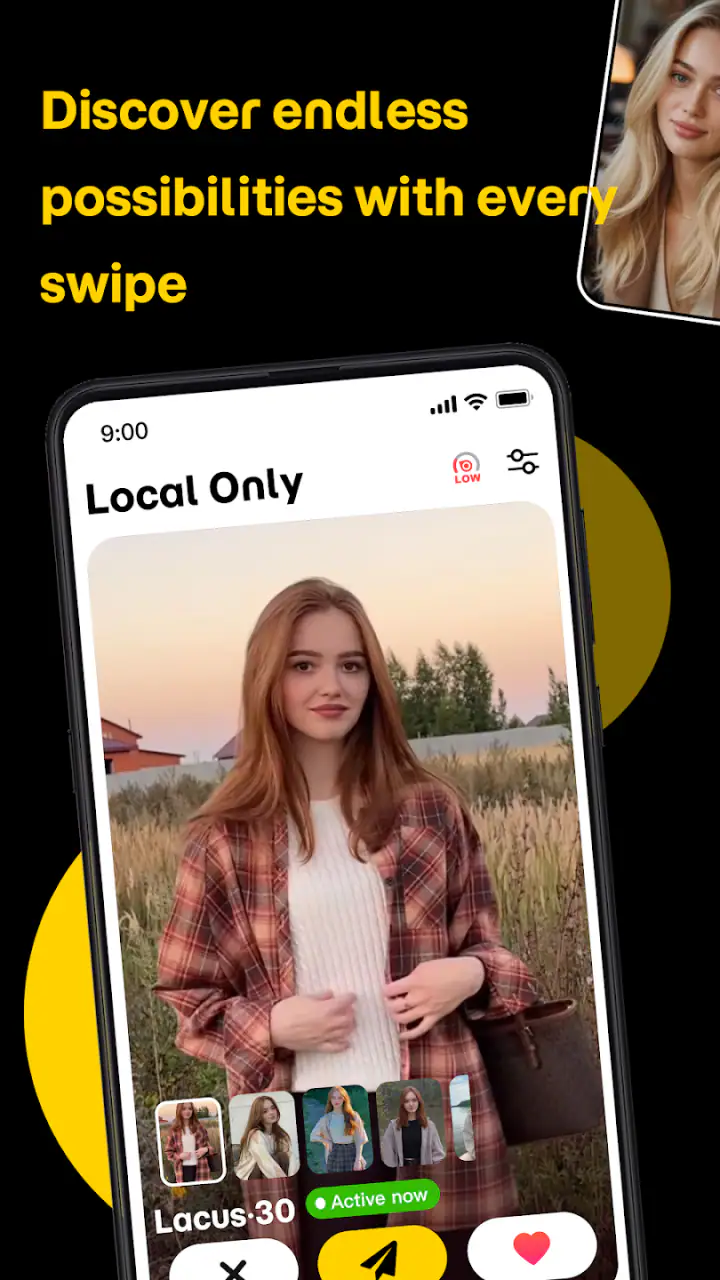
In value terms, the free entry point is its strongest advantage. You can judge the central idea without committing money beforehand. The paid side may appeal to people who find a recurring personal use for the service, but the correct value depends on that individual experience rather than on the app’s download price alone.
What the local angle can add
LocalOnly’s potential strength is relevance. Large entertainment platforms are excellent at finding popular material, but popularity is not the same as usefulness. A nearby focus can make discovery feel more connected to a person’s immediate surroundings, interests, or social curiosity. That can be valuable when global feeds feel repetitive or detached from daily life.
A second strength is intentionality. The app’s positioning encourages the user to think about boundaries and audience rather than simply scrolling through whatever a broad recommendation system presents. I found that this makes the experience feel less like passive consumption and more like deciding what kind of local interaction I actually want.
There is also a practical benefit for people who dislike overproduced social spaces. The straightforward concept may be attractive if you are tired of polished profiles, celebrity-heavy feeds, and content designed for maximum reach. The app’s appeal is not that it offers everything; it is that it appears to narrow the field to something closer and more immediate.
One useful workflow is to treat the first few sessions as a location test rather than a loyalty test. Use it at different times and in different familiar places, then compare whether the experience changes in a meaningful way. That helps separate the app’s actual value from the novelty of installing something new. For a local service, context matters more than a single first impression.
Another practical tip is to decide your personal boundary before exploring deeply. Because the audience is Mature 17+, I would not rely on surprise discovery to determine what feels acceptable. If you are using the app in a shared home, around children, or in a workplace setting, that audience designation should influence when and where you open it.
Where it differs from familiar alternatives
Compared with a mainstream entertainment feed, LocalOnly seems better suited to immediacy than abundance. The larger alternatives usually win when I want a dependable supply of professionally produced videos, established creators, or highly refined recommendations. They have years of accumulated content and broad audiences, which makes them easier to use when I do not want to think too much.
Compared with a neighborhood discussion platform, LocalOnly’s entertainment identity is the important distinction. A community board is generally best for questions, notices, recommendations, and practical local information. This app is more likely to interest someone looking for a less formal, more personal kind of local discovery. If your main goal is finding a plumber, checking a local event notice, or asking for advice, I would choose the community tool instead.
Compared with private messaging, the app offers a different kind of value. Messaging is dependable when I already know whom I want to contact. A local-first entertainment app is more exploratory, but that also means less certainty about what I will find. Users who prefer controlled conversations and known contacts may feel more comfortable staying with messaging apps.
That comparison reveals the central trade-off: LocalOnly may feel fresher precisely because it is narrower, but narrow products can be less satisfying when the local environment is quiet or does not match the user’s interests. A global alternative is usually more consistent. LocalOnly is potentially more relevant, but less universally reliable.
Limitations I would consider before spending
The biggest limitation is the dependence on local usefulness. An app built around nearby discovery cannot be judged only by its concept. The people, activity, and atmosphere available to you will shape the experience. Someone in a highly active area may find the premise engaging, while someone elsewhere may open it and quickly run out of reasons to return.
The Mature 17+ audience is another meaningful restriction. It narrows the group of people who can use the app comfortably and makes it unsuitable for family-oriented entertainment. It also means that anyone sharing a device should be aware of the app’s intended age range before using it.
The purchase range creates a second kind of friction. Free access lowers the risk of trying LocalOnly, but optional spending can complicate the value calculation. I would not pay for an advanced option simply to make the app feel more complete. The purchase should solve a clear problem for you, such as supporting a use pattern you already know you will maintain.
Version 1.0.1 also suggests that I would keep expectations practical rather than assuming a fully mature product ecosystem. That does not make the app a poor choice, but it does make patience more important. I would judge it by whether the core local experience works for me, not by expecting the breadth or polish of long-established entertainment services.
A less obvious trade-off is privacy comfort, even without making assumptions about specific permissions or policies. Local-oriented products naturally make users think about how much personal context they want to reveal. My advice is simple: share only what is necessary for the experience you want, avoid treating a nearby audience like a private friend group, and remember that “local” can feel more personal than “public” even when the audience is not actually small.
Who is most likely to get value?
I would recommend LocalOnly first to adults who enjoy trying unusual entertainment formats and who want something connected to their immediate surroundings. It also makes sense for people who find large social feeds too impersonal and are willing to accept a less predictable stream in exchange for a stronger sense of proximity.
It may suit someone moving to a new neighborhood, spending time in a different city, or simply looking for a different way to explore the social atmosphere around them. The key is curiosity, not a guarantee of constant content. You need to be comfortable evaluating the app on your own area rather than expecting the same experience another person might have elsewhere.
I would also consider it for a user who is careful with spending but open to optional upgrades. Since the download is free, the person can test the basic idea first. That is a better fit than someone who wants every feature immediately or who dislikes apps with a broad range of in-app purchase prices.
On the other hand, I would tell younger users to skip it because of the age classification. I would also steer away anyone seeking children’s entertainment, a dependable library of established shows, or a strictly private communication tool. For those needs, a family-safe streaming service, a conventional community app, or private messaging would be a better match.
People who dislike location-related social concepts may also find the premise uncomfortable, even if they like the entertainment category. In that case, the app’s defining feature becomes its main drawback. There is no reason to force yourself into a local discovery model when a broad, interest-based service gives you the control and distance you prefer.
My practical way to test it
I would begin by installing the free version and setting aside a short, deliberate trial rather than leaving it open in the background all day. Start in a familiar place, explore enough to understand the local character, and ask whether the content feels genuinely relevant or merely different. The goal is to identify repeat value, not just first-use novelty.
Next, compare it with the app you normally use for entertainment. If LocalOnly gives you a kind of discovery that your usual service cannot provide, that difference is meaningful. If it simply feels thinner, less comfortable, or harder to navigate without offering a local benefit, there is little reason to replace a tool that already works.
Before considering a purchase, write down the specific improvement you expect. “I like the idea” is not a strong enough reason to spend. “This optional purchase would make a local routine I already use more useful” is a clearer test. Because individual items can cost from $9.99 up to $179.99, I would be especially cautious about moving from curiosity to payment without a concrete purpose.
Finally, decide whether the Mature 17+ setting fits your real circumstances. An app can be interesting and still be wrong for a shared family tablet, a child’s phone, or a workplace device. Making that decision early prevents the audience classification from becoming an unpleasant surprise later.
My verdict on LocalOnly
LocalOnly is worth trying if you want entertainment with a nearby, less conventional perspective and you are happy to judge it by the quality of your local experience. Its free entry point gives it a fair chance, while its Mature 17+ classification clearly defines who should consider it. I appreciate that the concept has a point of view instead of trying to imitate every large social platform at once.
I would not call it an automatic replacement for mainstream entertainment apps. Those alternatives remain better when I want reliable volume, familiar formats, or a broad catalog that does not depend on where I happen to be. LocalOnly’s value is more specific: it can make local discovery feel personal, but that benefit is not equally strong for every user or every place.
My buy-or-skip advice is therefore straightforward. Try the free experience first, keep your spending tied to a clear benefit, and skip it if the local angle does not become useful after a fair test. For the right adult user, that is a sensible path into a distinctive entertainment app. For everyone else, especially people wanting family-safe content, private communication, or guaranteed abundance, a more established alternative will probably deliver better value.
With an average rating of 4.6 from around 2.6 thousand ratings and more than 50 thousand installs, LocalOnly has attracted enough early attention to make it worth examining. Still, those figures do not remove the central question: does a local-first experience fit your habits? In my view, the app earns a cautious recommendation—not because it offers everything, but because its focused idea is genuinely useful when your surroundings are part of what you want from entertainment.
FAQs for LocalOnly
What is LocalOnly and what can I use it for?
LocalOnly is designed for sharing or transferring content directly between nearby devices without relying on a remote cloud service. Depending on the version and platform, it may help you move photos, videos, documents, or other files over a local connection. It is particularly useful when you want faster transfers, better privacy, or access to files without using mobile data or an online account.
Does LocalOnly require an internet connection or mobile data?
The main purpose of LocalOnly is to work within a local network or through a direct connection between compatible devices, so an active internet connection is generally not required for transferring content. However, you may still need Wi-Fi, Bluetooth, or local network access, depending on the feature being used. Initial installation, updates, advertisements, or optional online services could require internet access.
Is LocalOnly safe for sharing private files?
LocalOnly can be a convenient privacy-focused option because files are intended to remain within the local connection instead of being uploaded to a third-party cloud server. Nevertheless, privacy also depends on your network security and device settings. Only connect with people and devices you recognize, review permission requests carefully, and avoid transferring sensitive information over open or unfamiliar public networks.
Which devices and file types are supported by LocalOnly?
Support can vary according to the operating system, app version, and connection method. LocalOnly is generally intended for nearby Android or iOS devices, but both devices may need the application or a compatible sharing method installed. Common media and document formats are usually the easiest to transfer, while very large files, unusual extensions, or protected content may have limitations.
Are there any important limitations before downloading LocalOnly?
Before installing LocalOnly, remember that the experience may depend on Wi-Fi quality, device compatibility, available storage, and the permissions granted to the app. Transfers can be interrupted if a device locks, leaves the local network, or disables wireless access. Some features may also differ between Android and iOS, so checking the current store listing and requirements is recommended.
Pros
- Works without an internet connection
- making it useful for offline tasks.
- Keeps local data on the device instead of relying on cloud storage.
- Can improve privacy by avoiding unnecessary online synchronization.
- Useful in areas with weak
- expensive
- or unavailable mobile data.
- Offline operation can reduce battery usage caused by network activity.
Cons
- Data may be lost if the device is damaged and no backup is available.
- Sharing information with other devices may require extra manual steps.
- Features depending on online services may be unavailable or limited.
- Storage space can become an issue when keeping substantial local data.
- Moving content to a new phone may be less convenient than cloud-based apps.


